OpenMind - Mental Wellness App
Increased mental therapy access and reliability for high school students
Role
Product Designer
Team
Just me 🧘
Tools
Figma
Duration
10 weeks
Background
Students face a severe lack of access to mental health support, leading them to manage depression and stress without adequate guidance.
High academic pressure and demanding school environments place substantial strain on students’ mental well-being. However, counselling and mental health support remain limited, difficult to access, or financially out of reach, leaving many students with inadequate help.
As a result, many students rely on unreliable sources of information for self-treatment, such as the Internet, which come with dangerous misconceptions and minimal efficacy.
Upon doing secondary research, I discovered that this was a problem common throughout Vietnam, my home country:

The assumption that broke
I assumed cost was the main barrier. I was wrong.
I initially hypothesized that students need cheaper therapy options. If I could aggregate low-cost counselors, demand would follow.
What I did:
📝 36 student surveys
Understanding students’ therapy awareness and willingness to pay.
🎙️ 2 student interviews
Uncovering attitudes toward mental health treatment.
🗺️ Journey mapping
The insight that changed everything
Teens are aware of mental therapy’s effective, but parental hesitation prevents them from seeking professional support.
60% of students surveyed wanted therapy and could afford it, but parents had final veto power. Since students are underage, parental consent is required for them to receive consultation services.
The pivot
I wasn't designing solely for students. I was also designing to convince parents.
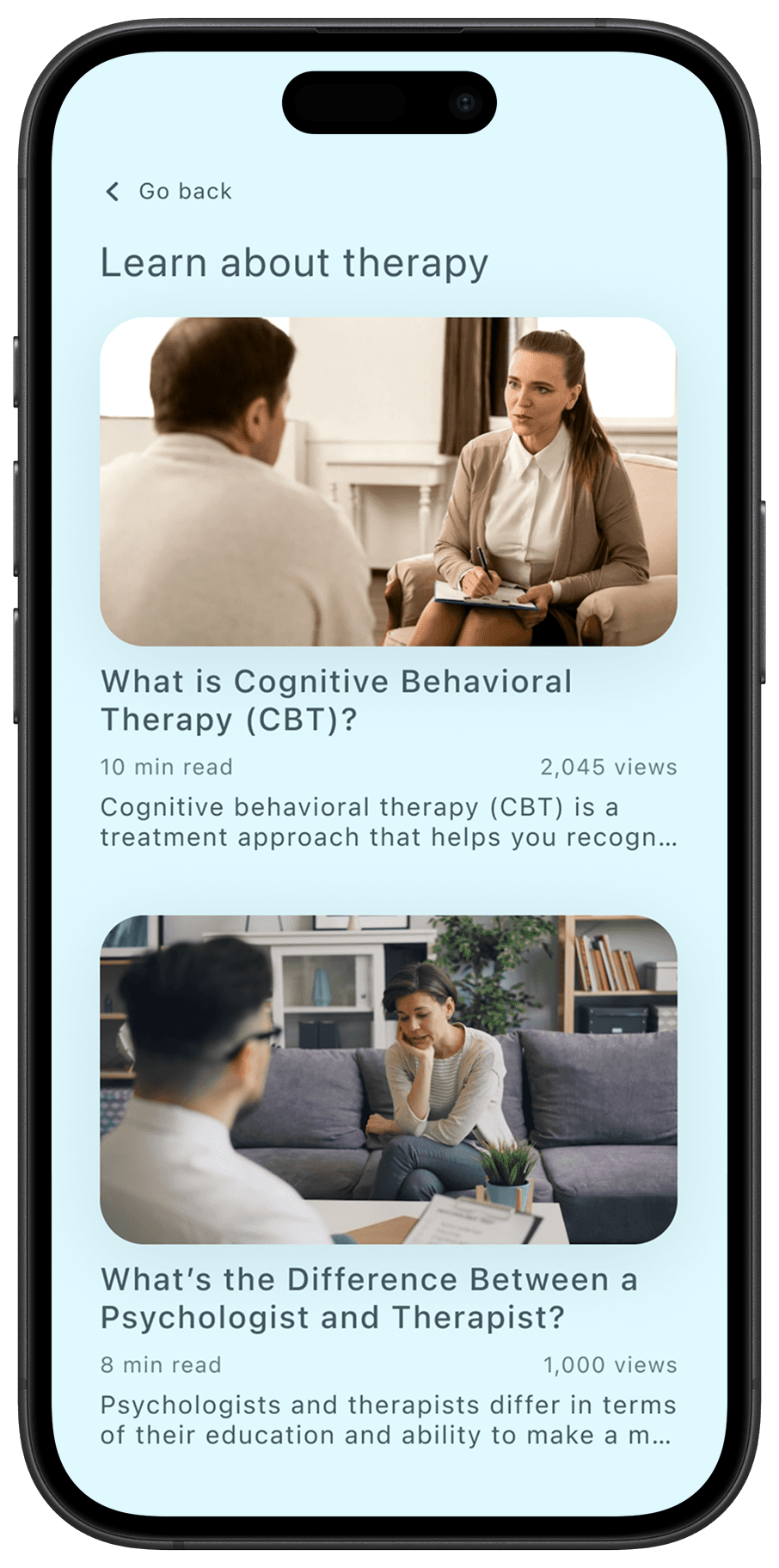
This meant the product couldn't just be a counselor directory. It had to be an educational bridge, normalizing therapy before facilitating access.
The problem
How might we make mental counseling credible enough for Vietnamese parents so students can access the support they need?
The bet
If I could make the therapy process transparent and professional-looking enough to earn parental trust, students would get the green light to book sessions.
V1: The wellness app that tried to solve too many problems
After identifying parental skepticism as the barrier, I designed a suite of features:
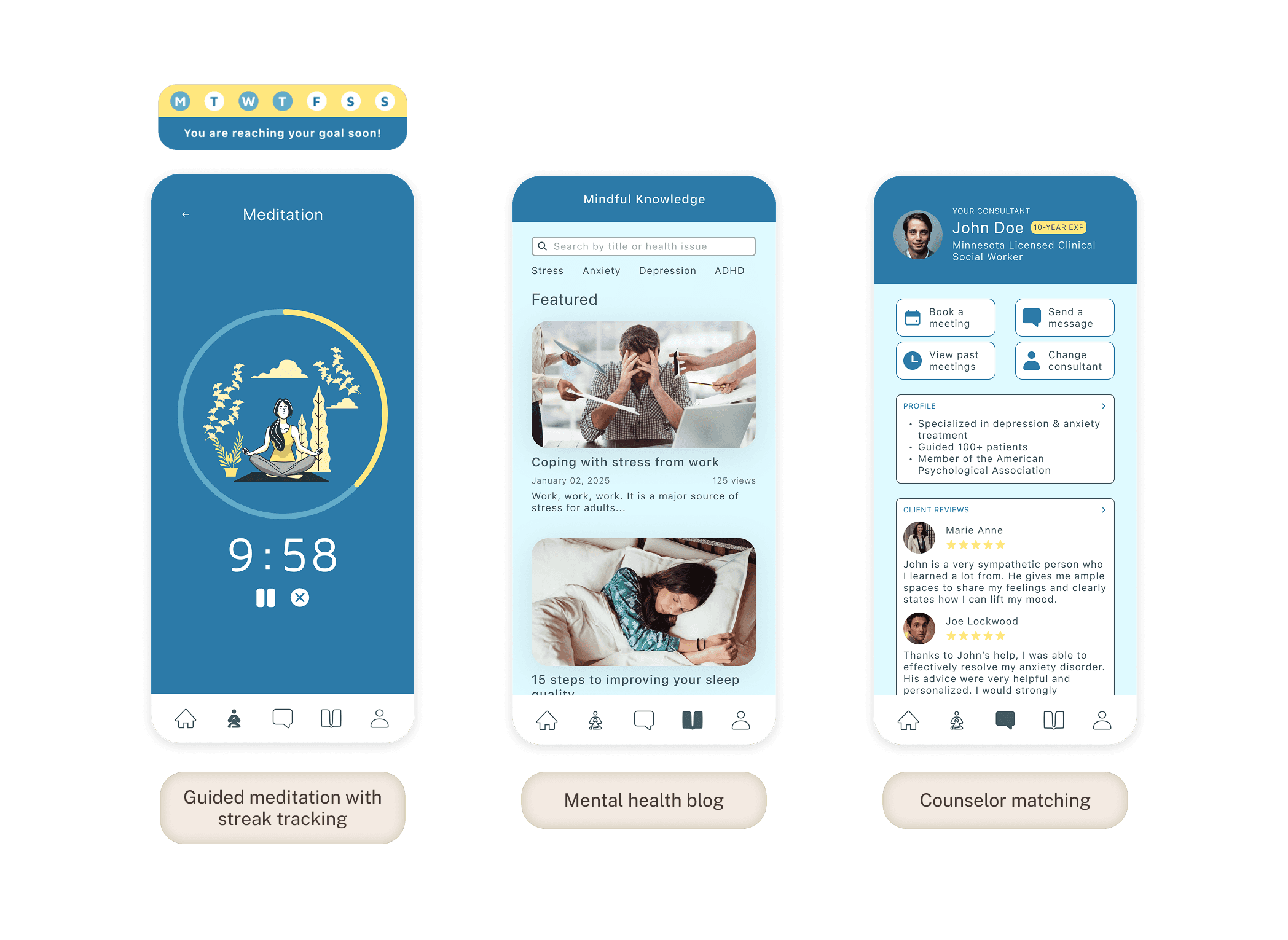
I thought this would work as it provides alternative self-care tools if students cannot access counselling.
Testing with 5 parent-student pairs, I found:
The decision
I completely cut meditation and gamification, focusing exclusively on education and counsellor matching.
User testing revealed the visual credibility problem
The initial design used bright colors and playful illustrations, attempting to make mental health feel "approachable."
However, parents said the playful design seemed "unserious." If they are spending $30-50/session, the product needed to look like a professional healthcare service.
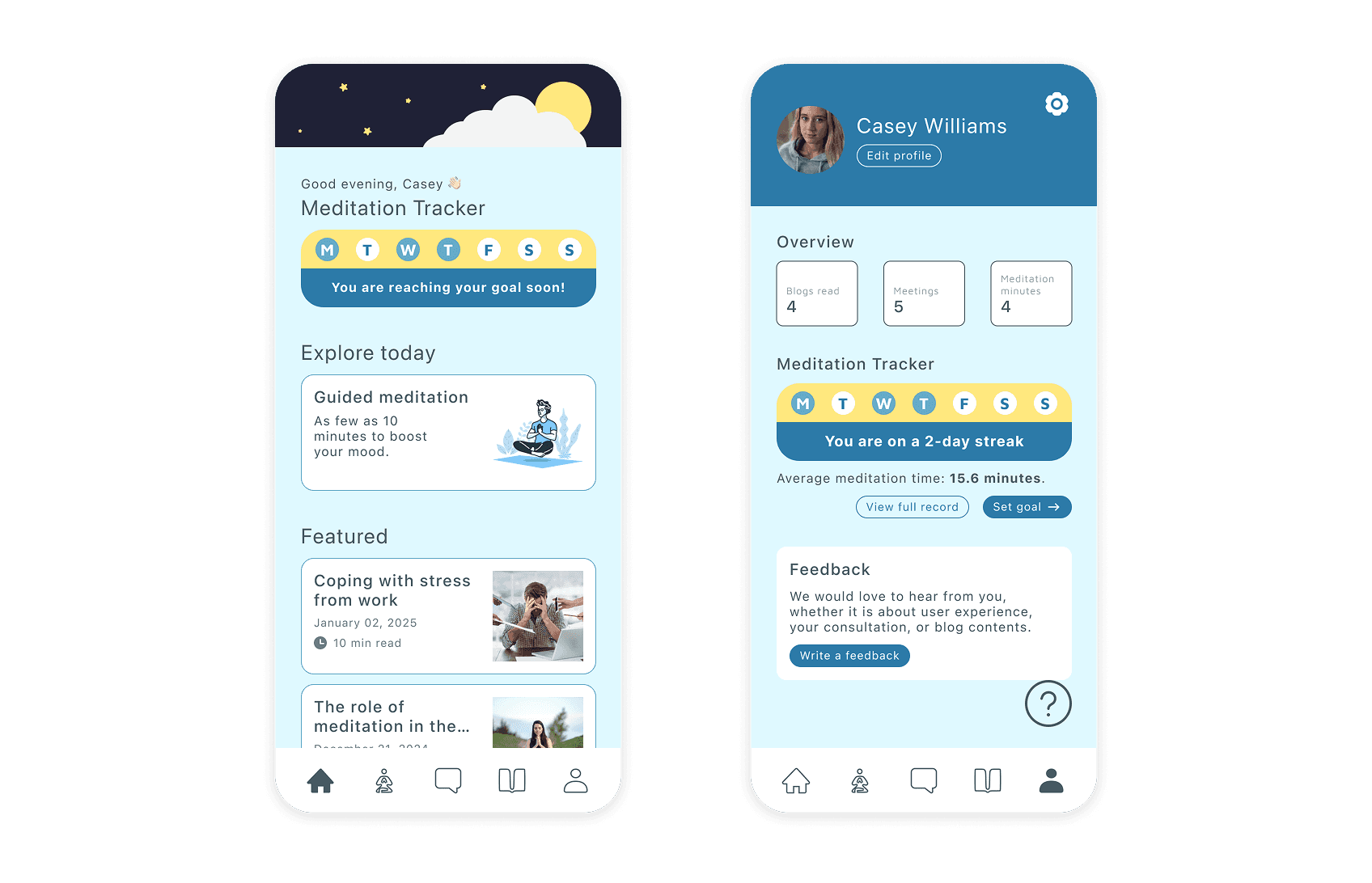
Old designs
What changed
Shifted to neutral tones & reduced image use to only the blog section
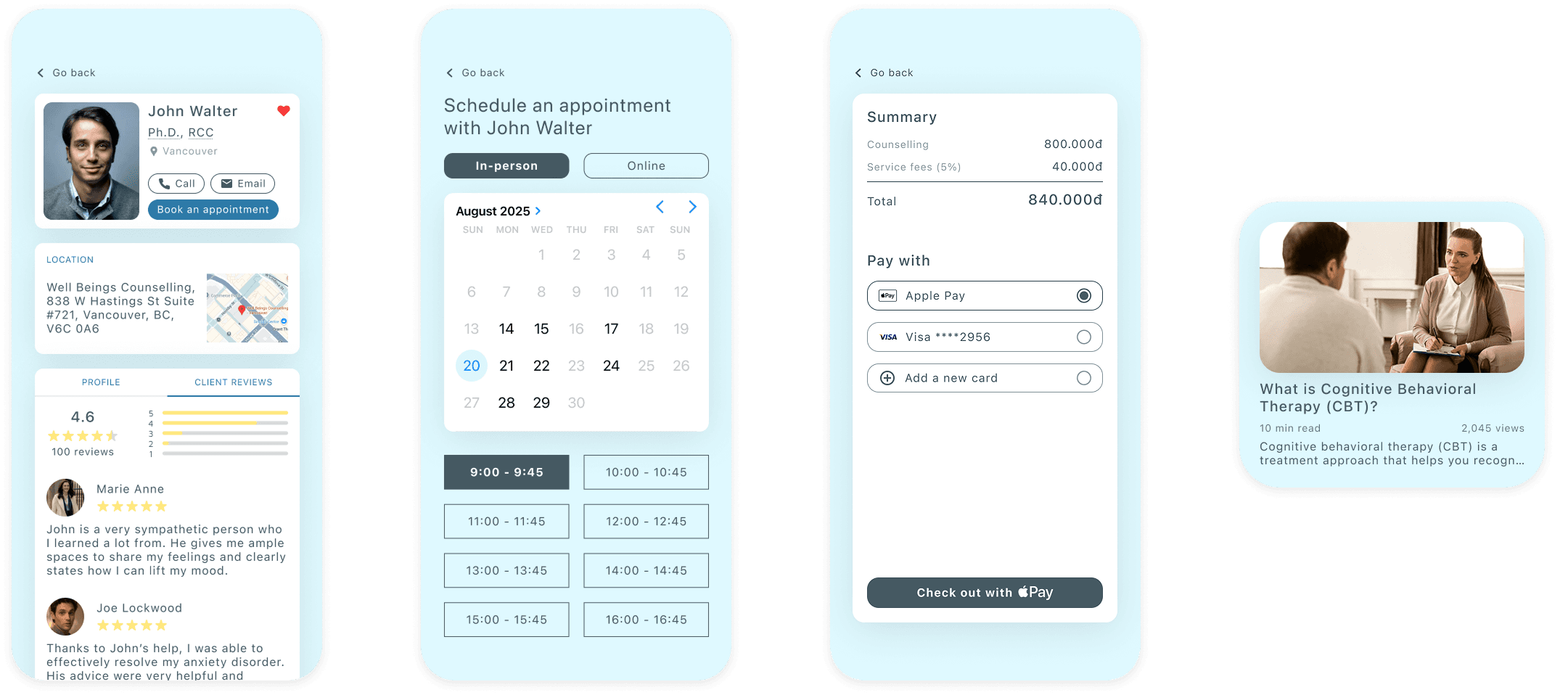
Blog became the entry point (free, no signup required) to build trust & educate
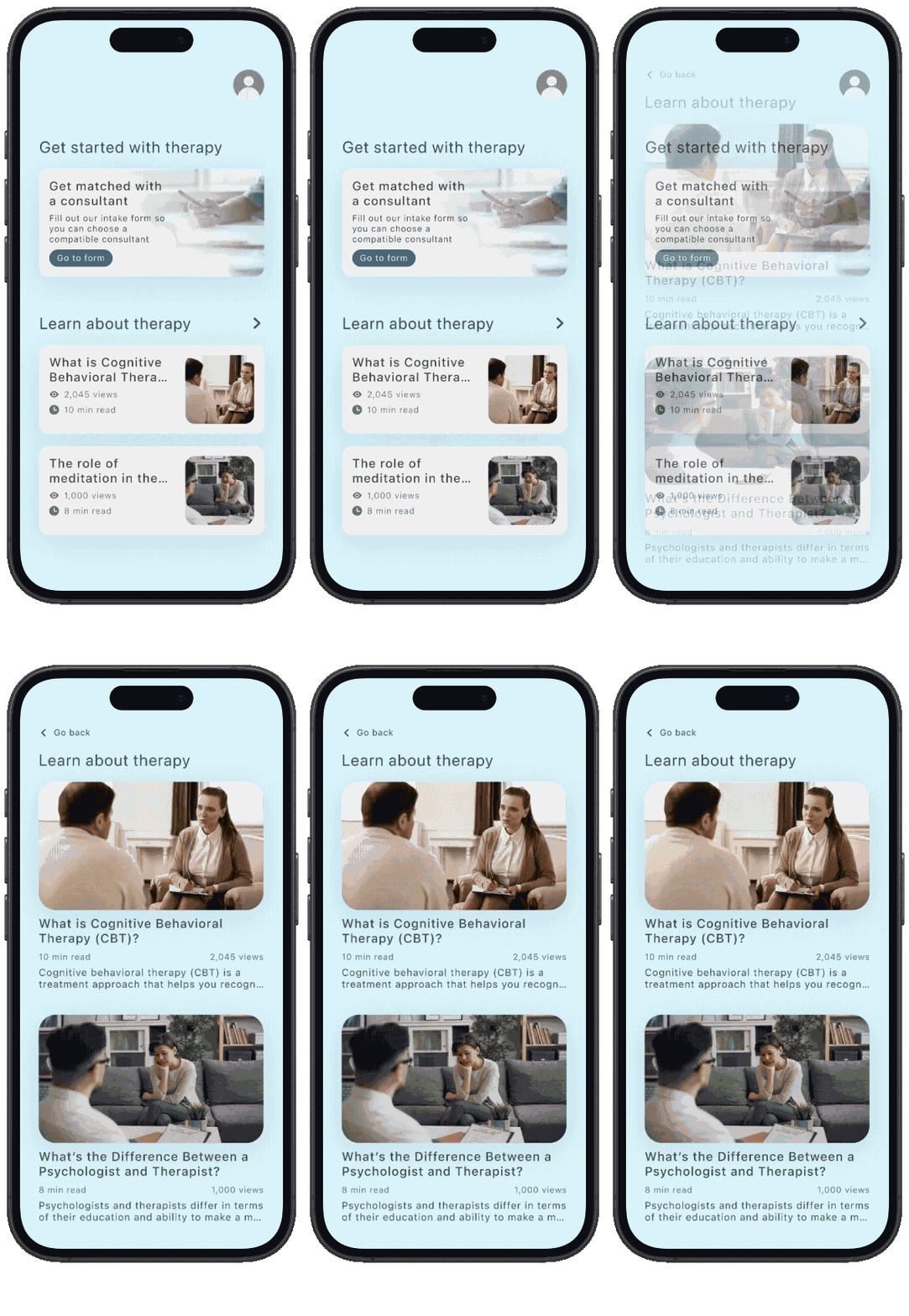
Let parents explore content without commitment
Positioned OpenMind as an "educational resource" before a "booking platform"
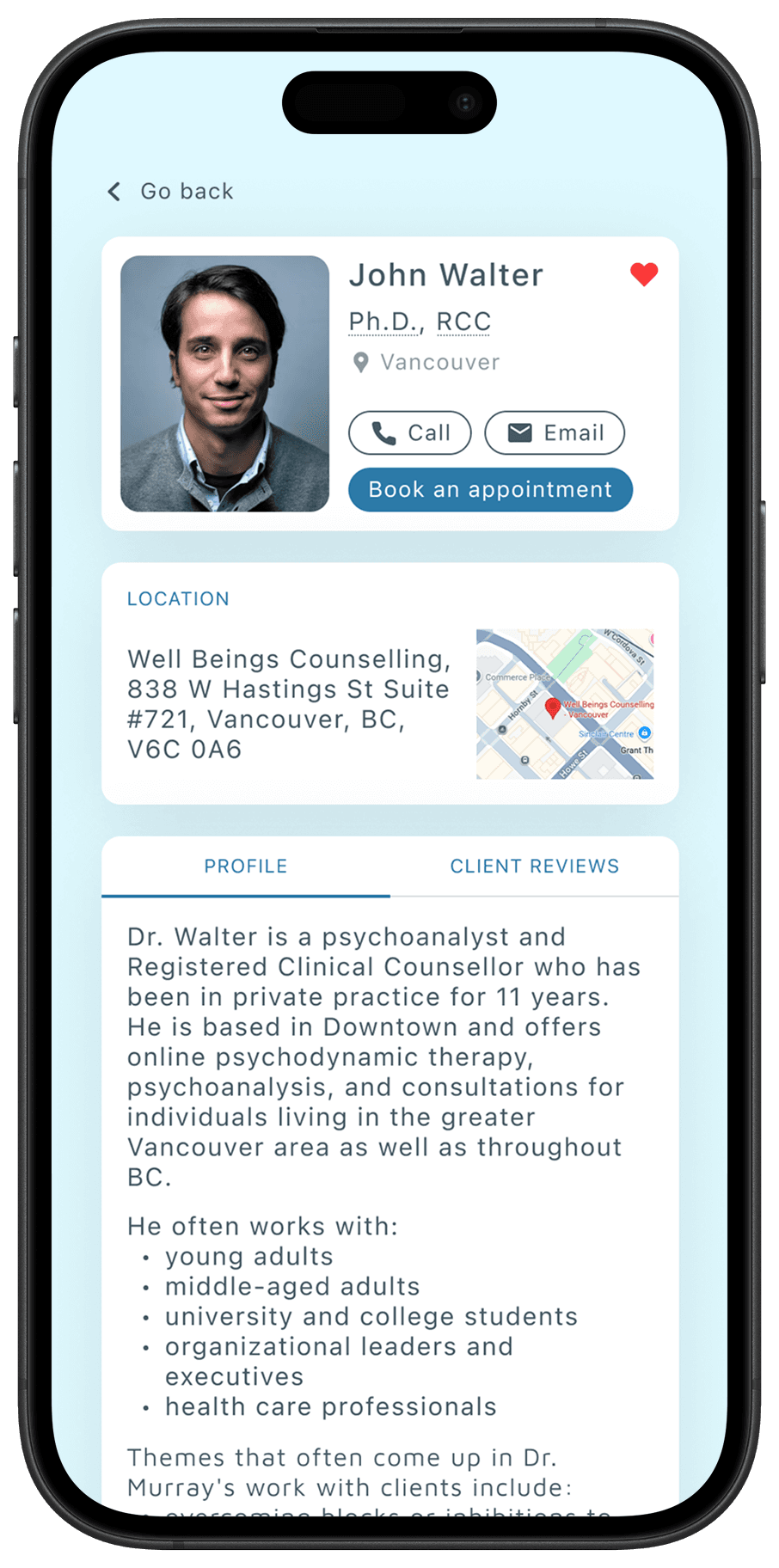
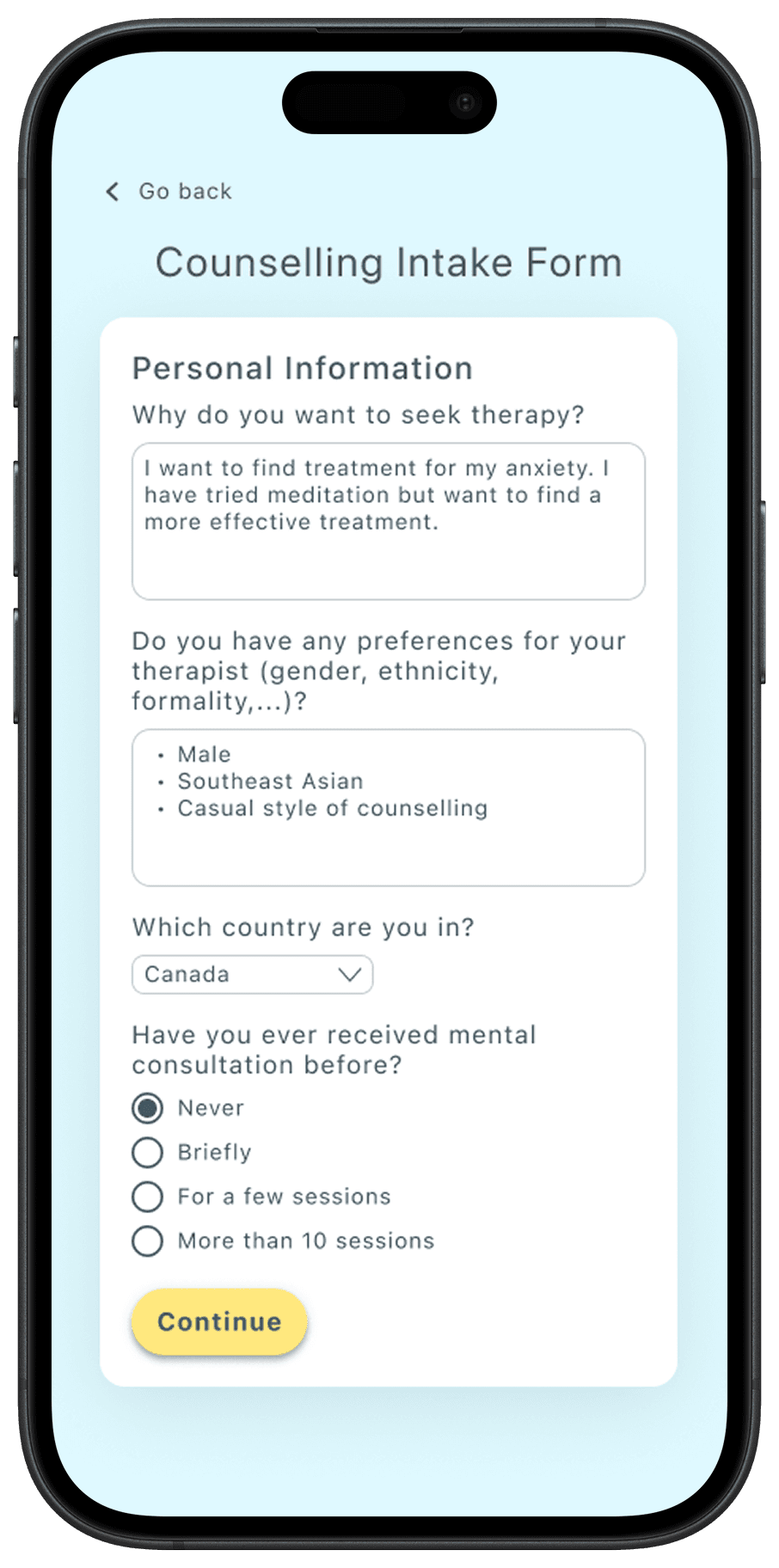
Counselor matching became the core flow, with clear steps and parental checkpoints
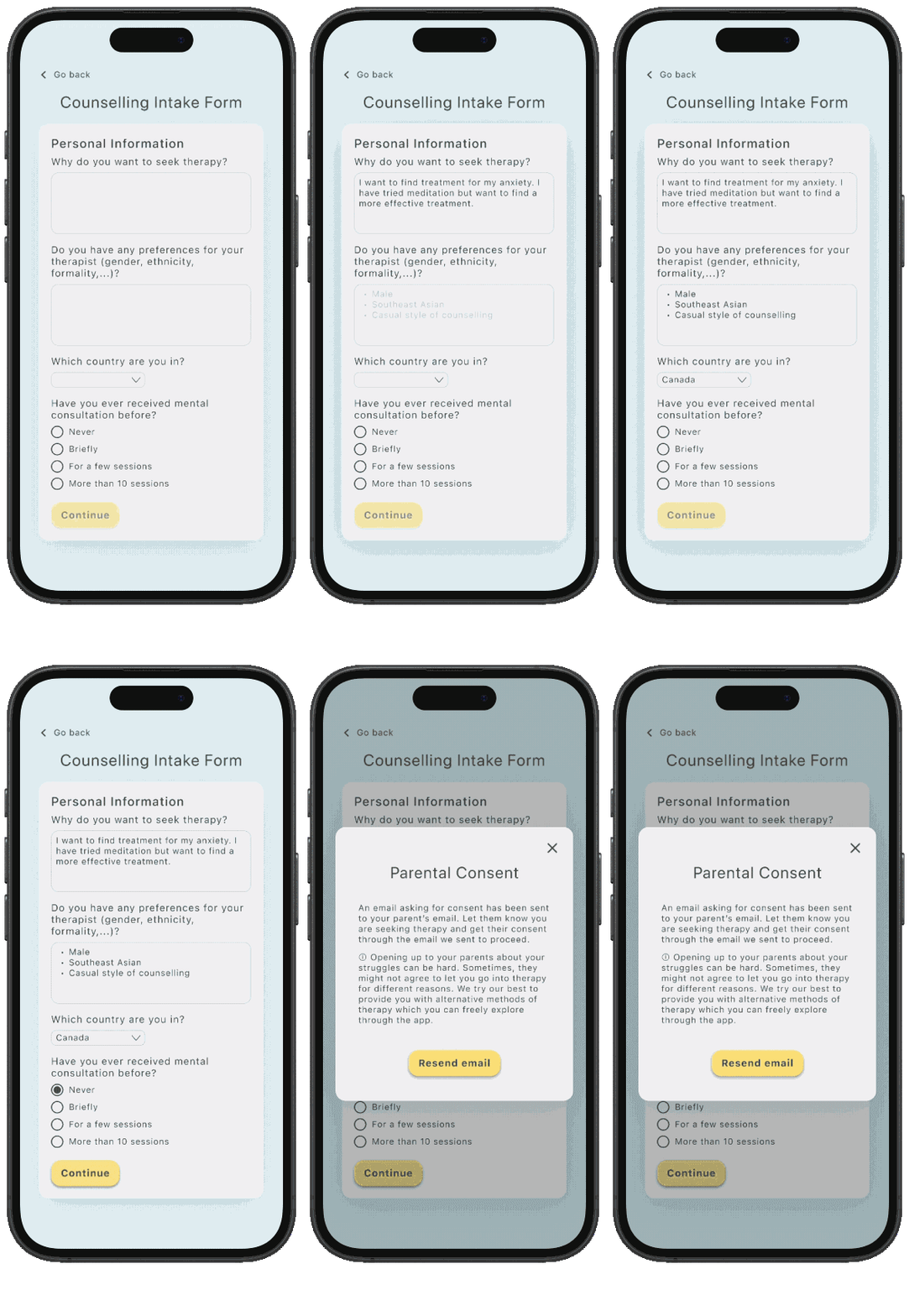
Added a dedicated "Request Parent Consent" step in the intake flow
This slowed conversion but was legally required and built trust
Counselor credentials became the dominant visual elements
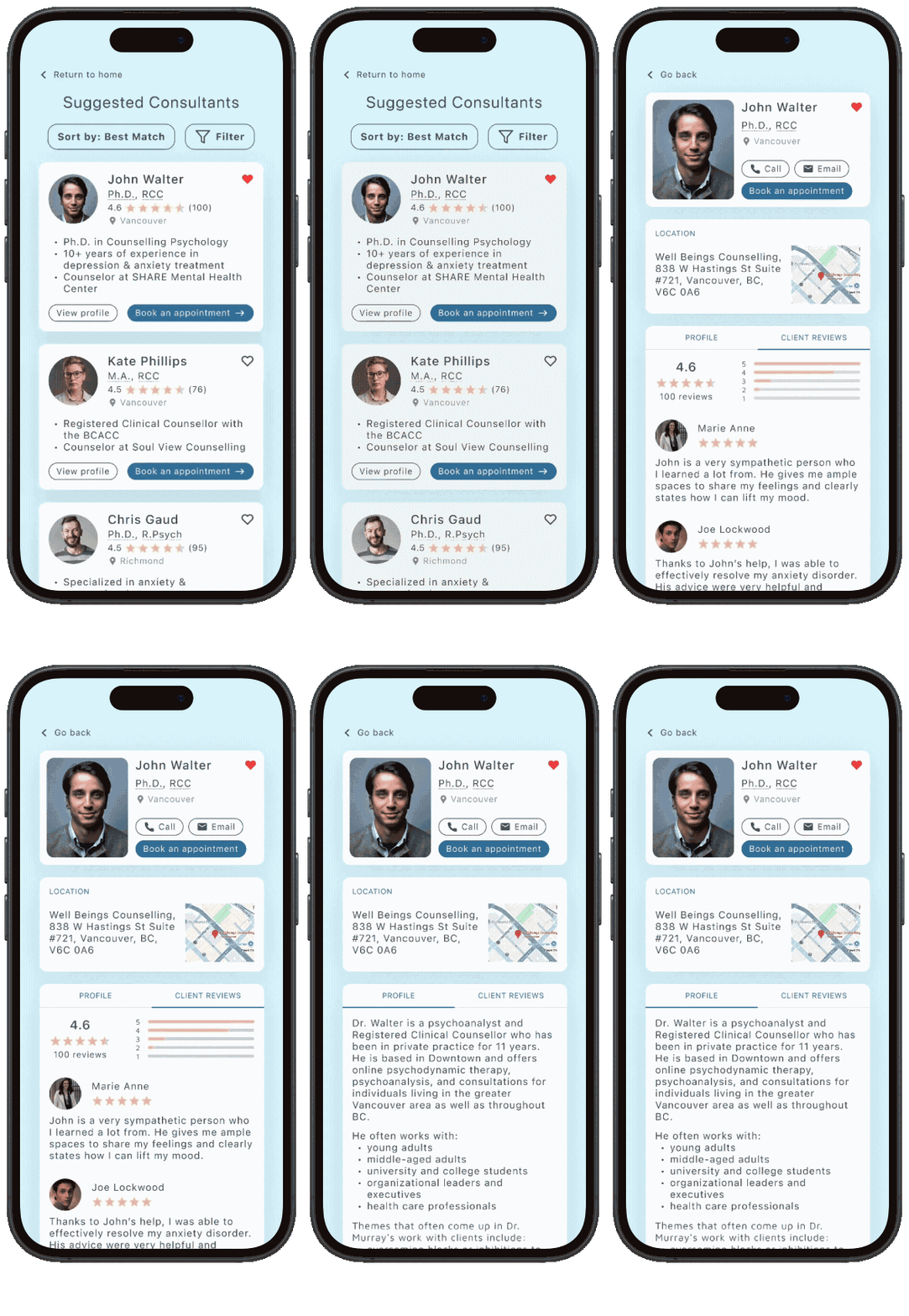
Made certifications, years of practice, and client reviews the dominant visual elements
Deprioritized counselor bios/personal stories as secondary info
My solution
OpenMind — matching mental health consultants to students, with their parents in mind.
Reflection
This was my first 0→1 design project, and there are many things I’d do differently if I were to start again.
Test with parents earlier
I only talked to parents until V1 was finished. If I'd interviewed and done a concept test with parents at the wireframe stage, I would've cut scope sooner.
Feature anxiety led me to solve the wrong problem
When I added meditation features, I was trying to make the product more "complete", for fear that counsellor matching had a low retention rate. In the future, I would test the core assumption first (i.e. will parents approve bookings?) before designing fallback features.
Acknowledge what I couldn’t validate
There were many confounding variables I didn’t consider, such as how the app can monetize and ensure students complete intake forms. If I were to take this forward, I'd pilot with one school's counseling office to test the full product flow before scaling.